
Business & Finance Guide
Profit Margin vs Markup: What's the Difference?
Profit margin and markup are two of the most commonly used business metrics, yet they are frequently confused. Learn how each works, when to use them, and how to avoid costly pricing mistakes.
Introduction
Profit margin and markup are closely related, but they are not the same thing. Both are used to understand profit, pricing, and business performance, but they measure profit from different angles.
This is why the two numbers can look confusing at first. A product with a 50% markup does not have a 50% profit margin. The markup is based on cost, while the margin is based on selling price. That difference matters when setting prices, comparing products, or reviewing business performance.
In this guide, we’ll explain the difference between profit margin and markup, show the formulas, walk through a simple example, and explain when each one is useful.
What Is Profit Margin?
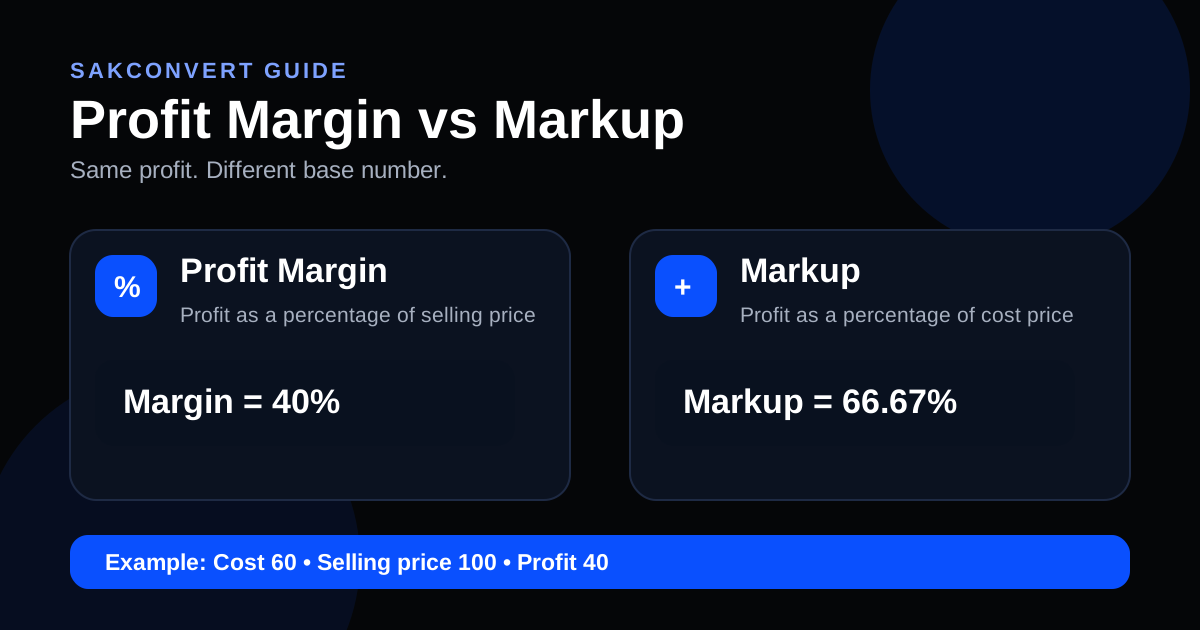
Profit margin shows how much of your selling price is profit. It is usually shown as a percentage of revenue.
For example, if a product sells for 100 and costs 60 to produce or buy, the profit is 40. The profit margin is 40%, because 40 out of the 100 selling price is profit.
The profit margin formula is:
Profit Margin % = (Profit ÷ Selling Price) × 100
Profit margin is useful because it helps you understand how much profit is left from each sale after costs are removed. Businesses often use margin to compare profitability across products, services, departments, or time periods.
You can also use the Profit Margin Calculator to calculate profit, margin, and markup quickly.
What Is Markup?
Markup shows how much you add to your cost price to create the selling price. It is usually shown as a percentage of cost.
For example, if a product costs 60 and you sell it for 100, the markup is 40. The markup percentage is 66.67%, because the 40 profit is measured against the 60 cost price.
The markup formula is:
Markup % = (Profit ÷ Cost Price) × 100
Markup is especially useful when setting prices. If you know how much a product costs and you want to add a specific percentage on top, markup gives you a direct pricing method.
You can use the Markup Calculator to calculate markup percentage, selling price, profit, and margin.
Profit Margin vs Markup: Key Differences
| Profit Margin | Markup |
|---|---|
| Based on selling price | Based on cost price |
| Measures profitability | Helps set prices |
| Usually lower % | Usually higher % |
The key difference is the number each calculation is based on.
Profit margin is based on the selling price. Markup is based on the cost price.
This means markup will usually be a higher percentage than profit margin, even when the profit amount is exactly the same.
Here is the simplest way to remember it:
Margin looks at profit as a percentage of the selling price.
Markup looks at profit as a percentage of the cost price.
This distinction is important because using the wrong percentage can lead to pricing mistakes. A business owner who wants a 40% margin but applies a 40% markup instead will end up with a lower profit margin than expected.
Worked Example
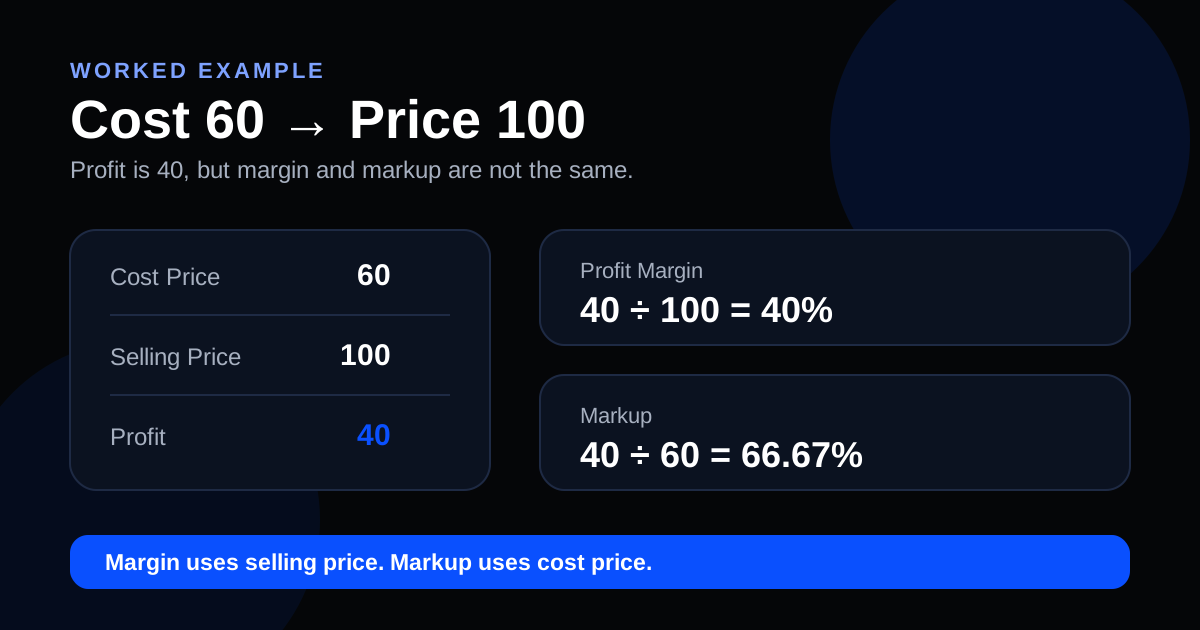
Let’s say a product has a cost price of 60 and a selling price of 100.
First, calculate the profit:
Profit = Selling Price − Cost Price
Profit = 100 − 60 = 40
Now calculate the profit margin:
Profit Margin % = (40 ÷ 100) × 100 = 40%
Now calculate the markup:
Markup % = (40 ÷ 60) × 100 = 66.67%
The profit amount is the same in both calculations, but the percentages are different because the base number is different.
In this example:
- Cost price: 60
- Selling price: 100
- Profit: 40
- Profit margin: 40%
- Markup: 66.67%
Common Mistakes
One of the most common mistakes is assuming that markup and margin are interchangeable. They are not.
For example, adding a 50% markup does not create a 50% profit margin. If a product costs 100 and you add a 50% markup, the selling price becomes 150. The profit is 50, but the margin is only 33.33%, because the profit is measured against the selling price.
Another common mistake is using markup when reviewing overall business profitability. Markup helps with pricing, but margin is usually better for understanding how profitable the business actually is.
A third mistake is ignoring other costs. Basic margin and markup calculations often use cost price only, but real business profitability may also depend on shipping, labour, software, rent, advertising, fees, and tax.
Which One Should You Use?
Use markup when you are setting prices from cost.
For example, if you buy a product for 40 and want to add 60% on top, markup is the right calculation.
Use profit margin when you are measuring profitability from sales.
For example, if you sold 10,000 worth of products and want to know what percentage was profit, margin is usually the better measure.
In practice, many businesses use both. Markup helps set prices. Margin helps measure performance.
Frequently Asked Questions
Is markup the same as profit margin?
No. Markup and profit margin both measure profit, but they use different base numbers. Markup is based on cost price, while profit margin is based on selling price.
Why is markup higher than margin?
Markup is usually higher because it measures profit against the cost price, which is normally lower than the selling price. Margin measures profit against the selling price.
Can a 50% markup mean a 50% margin?
No. A 50% markup does not equal a 50% margin. For example, if something costs 100 and is sold for 150, the markup is 50%, but the profit margin is 33.33%.
Which is better for pricing?
Markup is often easier for setting prices because it starts with the cost price. However, profit margin is usually better for understanding overall profitability.
Which calculator should I use?
Use the Markup Calculator if you want to calculate selling price or markup percentage. Use the Profit Margin Calculator if you want to calculate profit margin, profit, and markup together.
Conclusion
Profit margin and markup are both useful, but they answer different questions. Profit margin tells you how much of the selling price is profit. Markup tells you how much has been added to the cost price.
The easiest way to avoid confusion is to remember the base number. Margin is based on selling price. Markup is based on cost price.
If you are setting prices, markup can be helpful. If you are reviewing profitability, margin is usually more useful. For best results, use both together and check your numbers with a calculator before making pricing decisions.